

Blog
What Heat Press Machine Should I Buy?

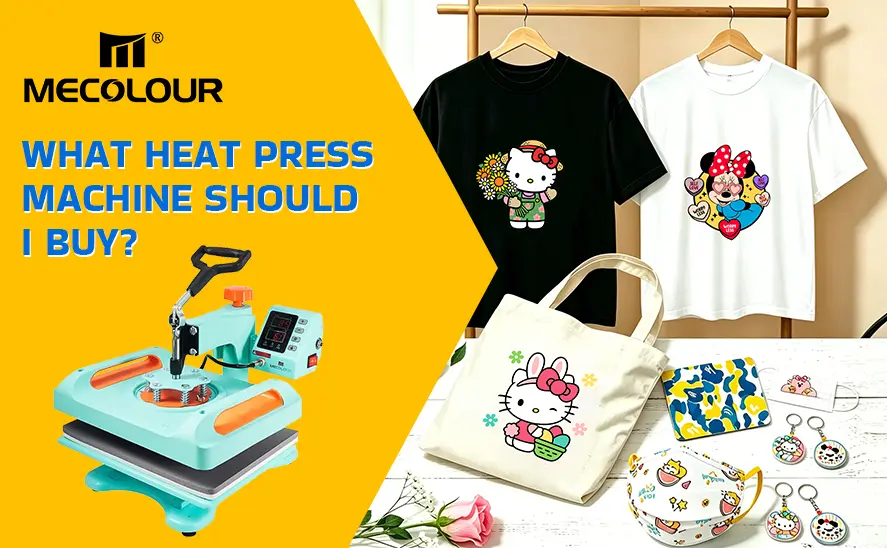
In the custom apparel industry, especially in T-shirt printing production, choosing the right heat press machine is one of the most important decisions that directly affects print quality, production speed, labor efficiency, and long-term profitability.
As a manufacturer-focused brand, MECOLOUR heat press machines are widely used in DTF transfer, HTV vinyl printing, sublimation apparel, and small-to-medium T-shirt production lines. However, different models are designed for different production needs.
This guide breaks down MECOLOUR heat press machine types, explains their applications, advantages, and limitations, and helps you choose the best equipment for your business stage.
Understanding T-Shirt Printing Requirements Before Choosing a Heat Press
Before selecting any machine, we must understand production requirements.
Key Production Factors
- Daily output volume (10 / 50 / 200+ shirts)
- Printing technology (DTF / HTV / Sublimation / Screen Transfer)
- Fabric type (cotton, polyester, blends)
- Operator skill level
- Budget and scalability
A wrong machine choice leads to:
- Uneven pressure
- Color fading
- Slow production speed
- High labor cost
- Frequent rework
MECOLOUR Flat Manual Heat Press (Entry-Level Production)
Typical Model
38×38cm / 40×50cm Manual Clamshell Press
Best For
- Startup T-shirt business
- Small custom orders
- Etsy / Shopify shops
- Sample production
Advantages
- ✔ Low investment cost
- ✔ Easy to operate and maintain
- ✔ Suitable for DTF and HTV printing
- ✔ Stable heating performance
- ✔ Compact size for small workshops
Disadvantages
- ✖ Manual pressure control (operator-dependent)
- ✖ Slower production speed
- ✖ Not ideal for large batch orders
- ✖ Requires more physical effort
Best Use Case
10–50 T-shirts per day, custom orders, and personalized printing businesses in the testing stage.
MECOLOUR Automatic Electric Heat Press (Semi-Professional Level)
Typical Model
Automatic Open Heat Press (38×38cm)
Advantages
- ✔ Automatic pressure adjustment
- ✔ Reduces human error
- ✔ More consistent heat transfer results
- ✔ Higher efficiency than manual machines
- ✔ Suitable for DTF production lines
Disadvantages
- ✖ Higher cost than manual press
- ✖ Still limited for mass production
- ✖ Requires stable electricity supply
- ✖ Slightly heavier maintenance
Best Use Case
30–100 T-shirts per day, growing online stores, and DTF-based businesses.
MECOLOUR Dual-Station Heat Press (High Efficiency Production Model)
Typical Model
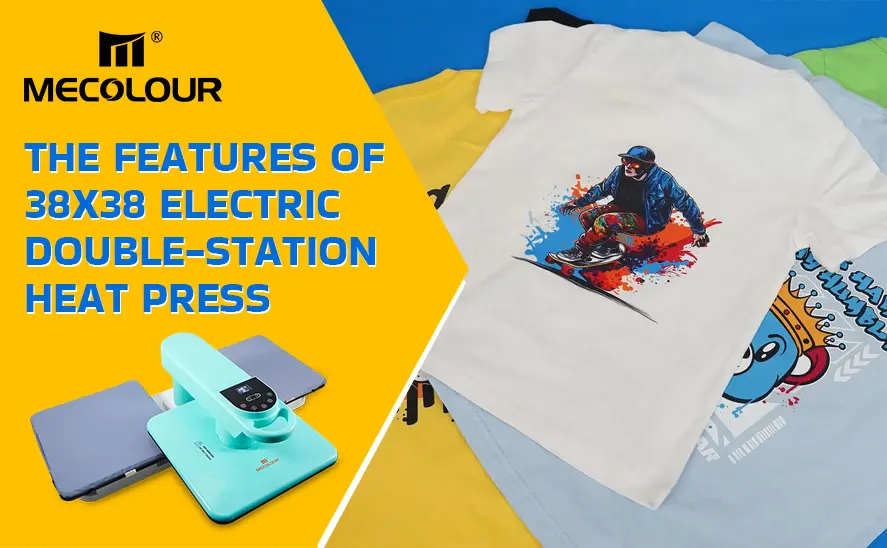
38×38cm Dual Worktable System
Advantages
- ✔ Continuous production (one side loading, one side pressing)
- ✔ Significantly increases output efficiency
- ✔ Reduces waiting time
- ✔ Ideal for small factories
- ✔ Stable industrial-level workflow
Disadvantages
- ✖ Larger workspace required
- ✖ Higher initial investment
- ✖ Requires trained operators
- ✖ Not portable
Best Use Case
50–150 T-shirts per day, small production workshops, and medium-scale custom apparel brands.
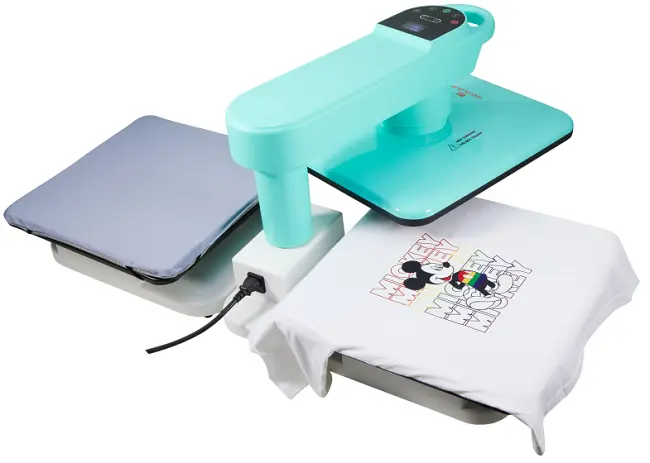
38X38 Electric Double-Station Heat Press
MECOLOUR Swing-Away Heat Press (Professional Precision Model)
Typical Model
40×50cm Swing-Away Press
Advantages
- ✔ Even pressure distribution
- ✔ Safer operation (heat plate moves away)
- ✔ Ideal for thick garments (hoodies and sweatshirts)
- ✔ High precision printing results
- ✔ Professional-grade finishing quality
Disadvantages
- ✖ Slower than clamshell machines
- ✖ Requires more workspace
- ✖ Higher operator training requirements
- ✖ Higher cost
Best Use Case
Premium T-shirt brands, hoodie printing, and high-quality retail apparel production.
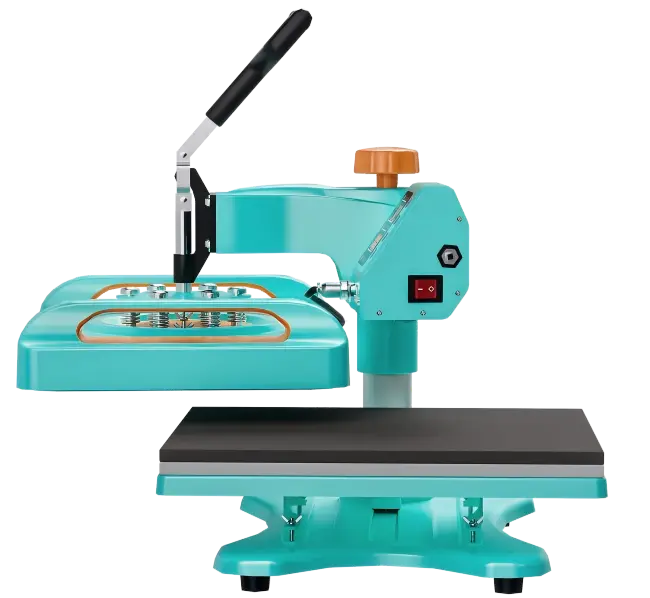
swing away heat press
MECOLOUR Pneumatic / Industrial Heat Press (Factory-Level Production)
Typical Model
Air-Compressor Driven Automatic Press
Advantages
- ✔ Maximum production efficiency
- ✔ Consistent industrial pressure
- ✔ Minimal manual labor
- ✔ Suitable for mass production lines
- ✔ Best for export wholesale business
Disadvantages
- ✖ High investment cost
- ✖ Requires air compressor system
- ✖ More complex maintenance
- ✖ Not suitable for beginners
Best Use Case
200–1000+ T-shirts per day, factory production, and wholesale export orders.
MECOLOUR Heat Press Machine Comparison Summary
| Machine Type | Production Speed | Cost Level | Best For |
|---|---|---|---|
| Manual Clamshell | Low | Low | Startups |
| Automatic Press | Medium | Medium | Growing Business |
| Dual Station | High | Medium-High | Small Factory |
| Swing-Away | Medium | High | Premium Quality |
| Pneumatic System | Very High | Very High | Industrial Factory |
Which Heat Press Should You Choose for T-Shirt Printing?
Based on real production experience, here are the best recommendations:
- 👉 Starting a business: 38×38cm MECOLOUR Manual or Automatic Heat Press
- 👉 Growing production: Dual-Station Heat Press
- 👉 Focusing on premium quality: 40×50cm Swing-Away Heat Press
- 👉 Building a factory: Pneumatic Industrial Heat Press System
MECOLOUR heat press machines cover a full range from entry-level desktop production to industrial-scale apparel manufacturing. The key to success is not choosing the most expensive machine, but selecting the right system based on your production volume, product positioning, and growth strategy.
In the T-shirt printing business, the heat press is not just a machine — it is the core of your production system.
Related:
How to Choose Heat Press Machine for T-Shirt Business?
Small vs Large Heat Press: Which One Should You Choose?
What Can You Do with a Heat Press?
Do you need a heat press for sublimation?
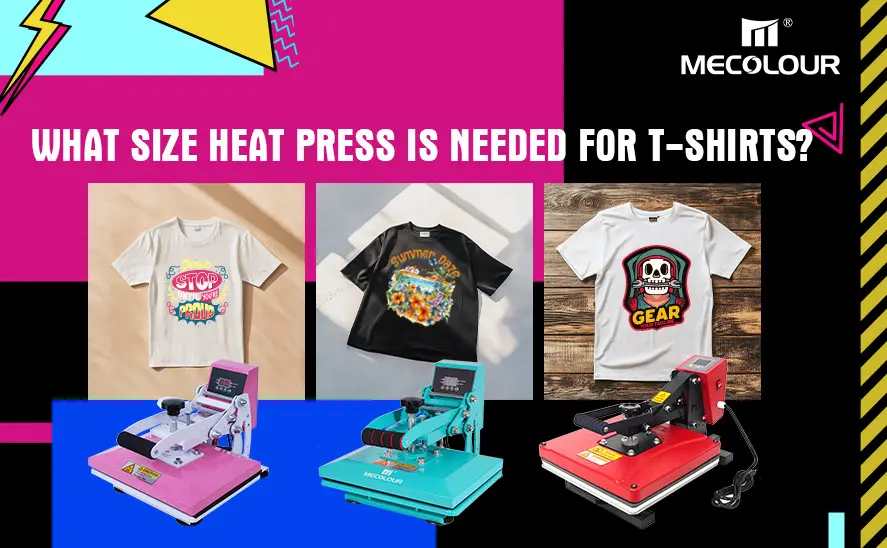
What size heat press is needed for t-shirts?
Mastering Heat Press: T-Shirt Printing Perfection