

Blog
Binding Machine Capacity: Punching, Binding and Output

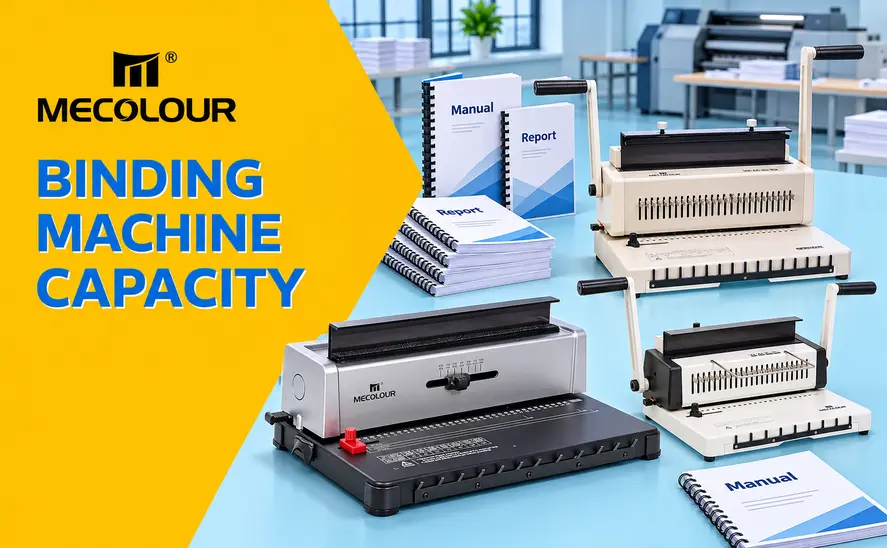
A binding machine has three different capacity limits: punching capacity is the number of sheets processed in one punch, binding capacity is the maximum thickness of one finished document, and production output is the number of complete books a team can finish in an hour or shift. Buyers should compare all three—not just the largest number in a specification table.
Quick answer: what each capacity number means
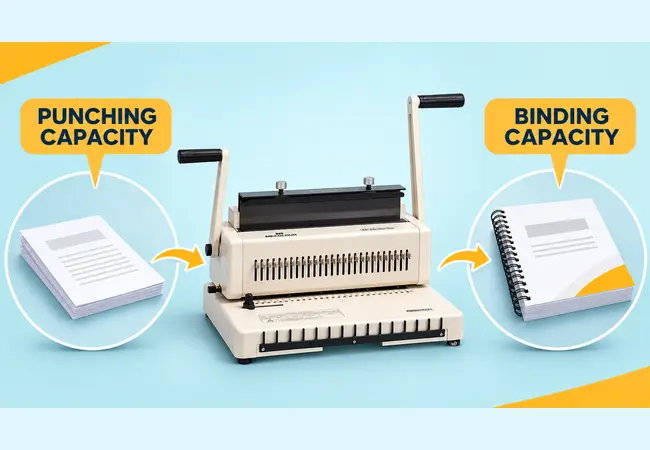
- Punching capacity: sheets punched per cycle, normally stated for a specific paper weight such as 80 gsm.
- Binding capacity: the maximum number of sheets a compatible spine or coil can hold in one document.
- Production output: finished documents per hour or shift, including collating, punching, inserting, closing, inspection and packing.
These numbers answer different purchasing questions. Punching capacity affects the number of cycles needed. Binding capacity determines the thickest document you can make. Output tells you whether the complete workflow can meet daily orders.
Difference between punching capacity and binding capacity
1. Punching capacity: sheets per cycle
Punching capacity is usually the first number buyers see, but it must be read with its test conditions. If a machine is rated for 12 sheets of 80 gsm paper, thicker covers or coated stock will reduce the practical batch size. For repeatable holes, operators should avoid forcing the maximum load when the paper is unusually heavy.
Official MECOLOUR specifications show why the operating method alone does not define capacity. The manual wire binding machine is rated for up to 12 sheets of 80 gsm paper per punch. The W25A heavy-duty binding machine is rated for 25 sheets, while the W200AS double wire electric binding machine is rated for 20 sheets.
This does not mean the manual model is always faster than the electric model. Electric punching can reduce operator effort and improve consistency in repeated work. The right comparison is cycles per document, operator workload and the rest of the binding process.
2. Binding capacity: sheets in one finished book
Binding capacity is separate from punching capacity. A machine may punch only a small batch at a time but assemble a much thicker finished document after several punch cycles. The binding element, pitch, document thickness and closing mechanism all affect the result.
For example, MECOLOUR lists a maximum binding capacity of 120 sheets of 80 gsm paper for the manual wire model. The spiral coil binding machine lists up to 500 sheets, while both the W25A and W200AS double-wire models list up to 140 sheets.
Do not compare these numbers without checking the binding style. Wire, coil and comb documents differ in appearance, page turning, consumables and target applications. Importers and distributors should confirm which spine sizes and pitches are readily available in their market before choosing a machine range.
3. Daily output: the number that affects delivery time
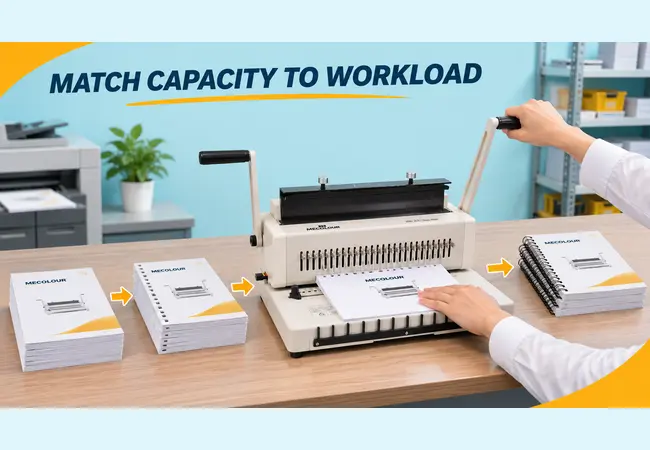
Daily output is rarely printed as one fixed machine specification because the operator and workflow matter. A realistic estimate includes document preparation, collating, punching, inserting the binding element, closing or crimping, quality inspection and packing.
A practical formula is:
Estimated daily output = available production minutes ÷ average minutes per finished document × utilization factor.
Instead of using an ideal speed, time a test batch of ten complete documents. Start when the pages are collated and stop after inspection. Then add allowance for material changes, setup, breaks and rework. This gives print shops a more useful capacity figure than punch speed alone.
Binding machine workflow matched
Official MECOLOUR capacity comparison
| Model | Punching capacity | Binding capacity | Format | Hole pattern |
|---|---|---|---|---|
| Manual book binding machine | 12 sheets, A4 80 gsm | Confirm by spine choice | A4 and below | 21 holes |
| Manual wire binding machine | 12 sheets, 80 gsm | 120 sheets, 80 gsm | A4 | 34 holes |
| Manual spiral coil binding machine | 12 sheets, 80 gsm | 500 sheets, 80 gsm | A4 | 46 holes |
| W25A heavy-duty binding machine | 25 sheets | 140 sheets | Up to 340 mm, F4 | 27 holes, 2:1 |
| W200AS electric double wire machine | 20 sheets | 140 sheets | Up to 300 mm, A4 | 23 holes, 2:1 |
Capacity values above are the published specifications for the linked MECOLOUR models. Confirm paper weight, spine size and application before ordering.
How to match capacity to your business
For offices and qualified startups
Choose a compact machine when document volume is occasional and operator time is flexible. Confirm that the paper size, hole pattern and local consumables match the reports, manuals or notebooks you plan to produce.
For print shops
Calculate cycles per document and test the complete workflow. Adjustable margins, movable cutters and reliable alignment can be as important as the maximum sheet number when jobs change frequently.
For importers, distributors and Amazon sellers
Build a range around clear use cases: entry-level office work, thick coil-bound documents and higher-volume wire binding. Check packaging dimensions, spare parts, consumable compatibility and OEM options. The W25A and W200AS pages list customization for color, logo and packaging boxes.
Questions to ask a binding machine supplier
- What paper weight was used for the punching and binding capacity test?
- Which spine type, size and pitch are compatible with the machine?
- What is the maximum paper width and supported document format?
- Are the punch margin and pins adjustable?
- Which steps are manual and which are electric?
- What consumables, wear parts and spare parts are available?
- Can the color, logo, manual and packaging be customized for distribution?
Request a capacity-matched binding machine
Tell MECOLOUR your daily volume, paper size, sheets per document, preferred binding style, target market and OEM requirements. We can help you compare suitable models and prepare the information your sales channel needs. Request a binding machine catalog and quotation.
Related:
Best Book Binding Machines for Professionals and Hobbyists
How Does a Double Wire Binding Machine Work?
2:1 vs 3:1 Wire Binding Machine: Which Is Best for Your Business?
What Is a 2:1 Cinch Binding Machine?
Best Mini Binding Machine for Smart Buyers